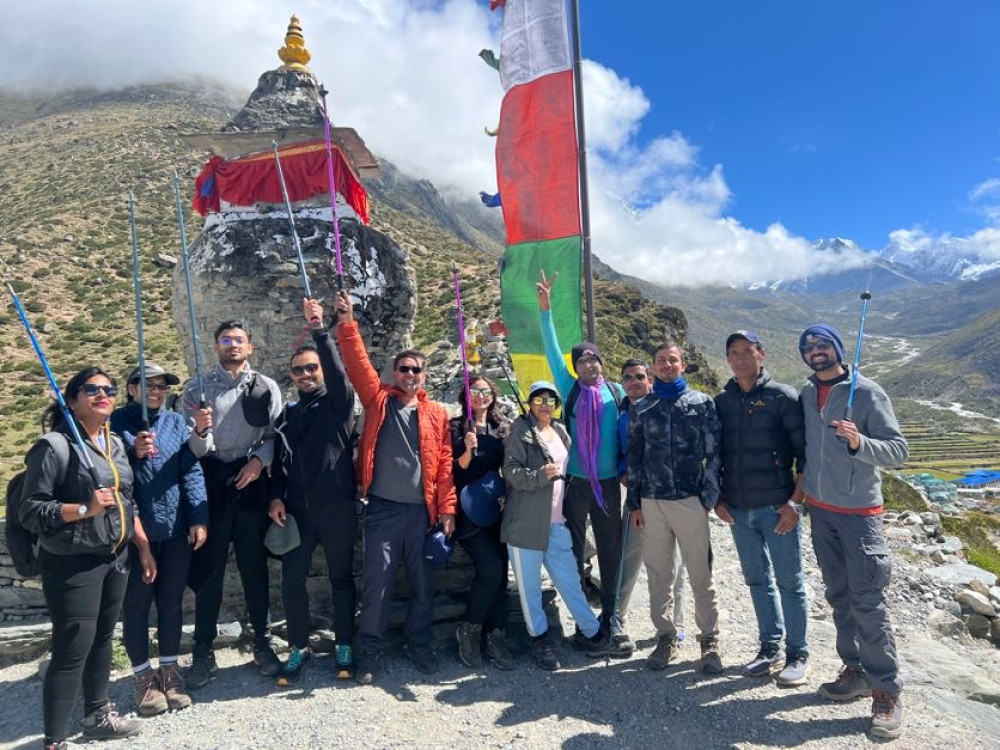
Hiring a trek guide for the Everest High Passes Trek is highly recommended, as it is a challenging and demanding trek that requires experience and knowledge of the region. Our trek guide can provide valuable assistance, ensure your safety, and enhance your overall trekking experience. Here is an overview of what hiring a trek guide for the Everest High Passes Trek entails:
Hiring a trek guide for the Everest High Passes Trek is highly recommended, as it is a challenging and demanding trek that requires experience and knowledge of the region. Our trek guide can provide valuable assistance, ensure your safety, and enhance your overall trekking experience. Here is an overview of what hiring a trek guide for the Everest High Passes Trek entails:
A trek guide for the Everest High Passes Trek will have extensive knowledge of the region, including the trail conditions, weather patterns, and cultural aspects. They can provide insights into the local communities, flora and fauna, and the history of the area.
The Everest High Passes Trek involves crossing challenging mountain passes, including Cho La Pass, Kongma La Pass, and Renjo La Pass. A trek guide will plan the route, navigate the trails, and ensure you stay on track, minimizing the risk of getting lost or encountering difficulties.
Trek guides are trained in mountain safety and first aid. They are equipped to handle common trekking-related issues like altitude sickness, injuries, and emergencies. They will monitor your well-being, provide guidance on acclimatization, and take necessary precautions to ensure your safety throughout the trek.
A trek guide can assist with arranging accommodation in tea houses or lodges along the trekking route. They can help you find suitable places to rest and eat, ensuring you have a comfortable stay and access to nourishing meals during the trek.
Trek guides often have a good understanding of the local culture and traditions. They can facilitate interactions with local communities, provide insights into their way of life, and help bridge language barriers between trekkers and locals.
Hiring a trek guide can simplify logistical aspects such as obtaining necessary trekking permits, organizing transportation to and from the trailhead, and managing paperwork and documentation required for the trek.
Trekking in the Everest region can be physically and mentally demanding. A trek guide can provide encouragement, motivation, and support throughout the journey, helping you overcome challenges and achieve your trekking goals.
It's important to choose a qualified and experienced trek guide from a reputable trekking agency Like Actual Adventure . All Guides have the necessary licenses and certifications, and inquire about their previous experience leading treks in the Everest region. Discuss your expectations, requirements, and any specific concerns you may have before finalizing the hiring process.
Remember, the Everest High Passes Trek is a strenuous adventure that requires proper preparation, physical fitness, and acclimatization. Hiring a trek guide can contribute significantly to your safety, enjoyment, and successful completion of the trek.
Yes, hiring a licensed guide is highly recommended for the Everest High Passes Trek. The route includes high-altitude passes above 5,000m, glacier sections, and remote trails where navigation can be difficult and risky.
The average cost of hiring a licensed trekking guide is around USD 30 to 45 per day, depending on experience, language skills, and agency arrangements.
A professional guide usually includes:
Yes, most trekkers hire guides from Kathmandu through trekking agencies or independent arrangements. This ensures you get a licensed, experienced guide before starting the trek to Lukla or Salleri.
Yes, it is significantly more difficult than the standard Everest Base Camp trek. It includes three high passes—Kongma La, Cho La, and Renjo La—along with glacier crossings and longer trekking days.
Yes, hiring a porter is highly recommended. A porter carries your heavy backpack (usually up to 20–25 kg), allowing you to focus on trekking safely at high altitude with less physical strain.
It is not recommended to do this trek without a guide due to unpredictable weather, altitude risks, and complex routes. A guide significantly improves safety and helps in emergencies like altitude sickness or route changes.